
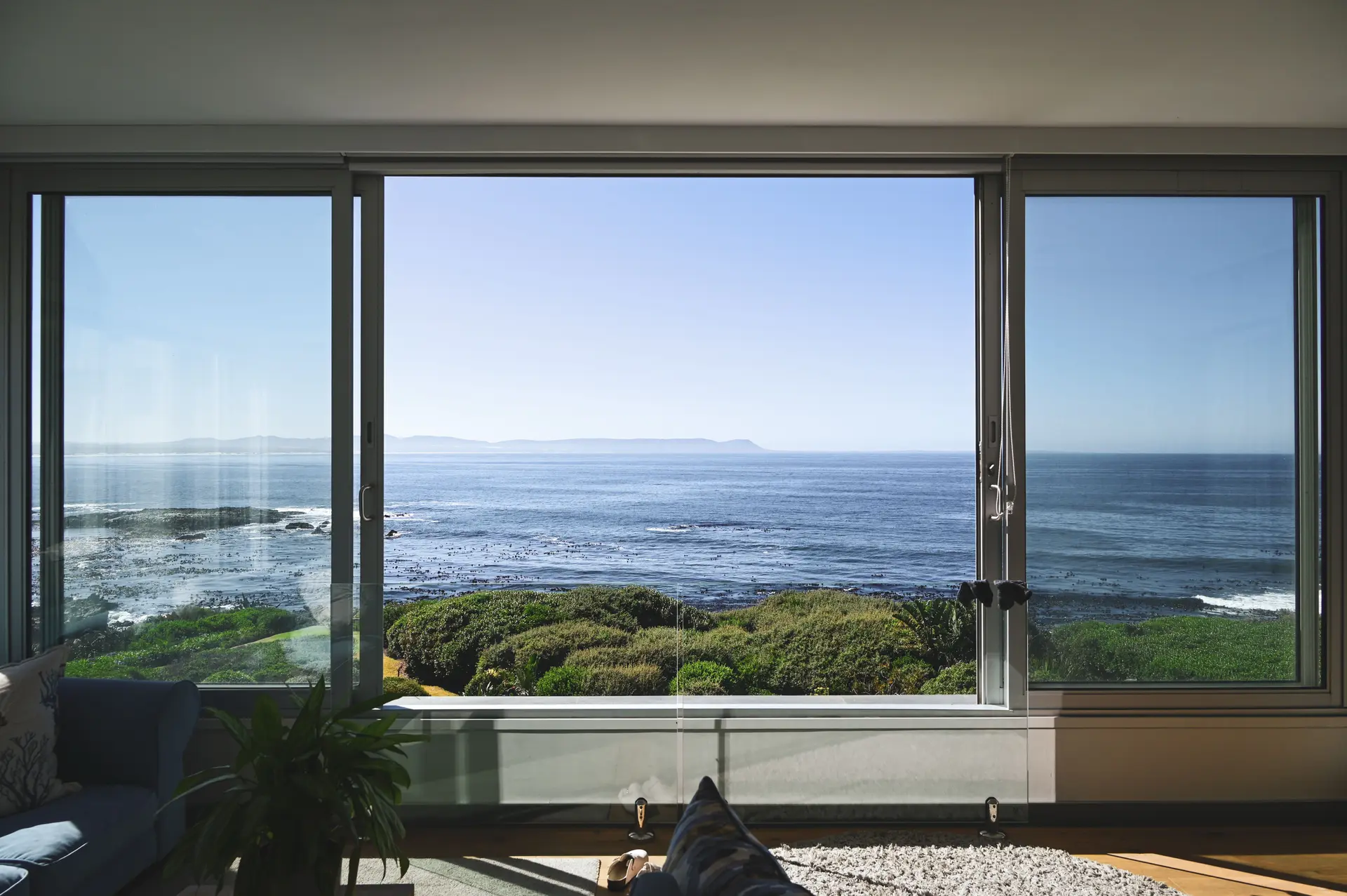
If you are replacing windows on a house near the water, vinyl and fiberglass are the two frames you will hear about most. Both shrug off salt air far better than steel or uncoated aluminum, and both meet California's energy rules with the right glass. They are not interchangeable, though. They behave differently in sun, in large sizes and over time, and on a coastal house those differences decide which one belongs on which wall.
This is how we compare them for owners around Redondo Beach and the beach cities.
How each frame handles sun, salt and temperature swings
Salt. Neither material corrodes. The weak points on both are the hardware and the screens, so stainless or coated locks, hinges and rollers matter more than the frame itself near the ocean.
Sun and heat. Vinyl expands and contracts more than fiberglass as it heats and cools. On a west-facing wall that takes the afternoon sun, a large dark vinyl frame can move enough to stress seals over the years. Manufacturers limit dark colors on vinyl for this reason. Fiberglass moves at close to the same rate as glass, so the seals between frame and glass see less strain.
Daily swings. Coastal houses rarely see extreme temperatures, but sunny walls do heat up quickly after foggy mornings. Fiberglass handles that cycle with less movement. Vinyl handles it fine in lighter colors and moderate sizes.
Expansion, seals and hardware on the coast
Because vinyl moves more, it is usually built with thicker frames and chambers to stay stiff. That is fine for typical bedroom and bathroom windows. For wide picture windows and large sliding doors facing the ocean, fiberglass or a reinforced vinyl frame keeps sightlines narrower and stays straighter.
Seals and weatherstripping wear on both. Look for a frame design that drains water out through weep holes, a sill with a raised back edge, and hardware rated for coastal exposure. A good installation with a sill pan and proper flashing matters more than the frame material for keeping wind-driven rain out.
Comparison at a glance
- Salt corrosion: neither frame corrodes
- Movement with heat: vinyl moves more, fiberglass very little
- Dark exterior colors: limited by most vinyl makers, widely available in fiberglass, which can also be painted
- Large openings: vinyl needs wider frames or reinforcement, fiberglass stays stiff with narrower frames
- Typical cost: vinyl lower, fiberglass higher
Look, sightlines and HOA rules
Fiberglass frames can be slimmer and take paint, so they suit houses where the window style is part of the look: a craftsman bungalow, a modern box with dark frames, a beach cottage with painted trim. Vinyl comes in fewer colors and has wider frames, which matters most on large openings.
Many coastal neighborhoods have HOA or architectural review rules about frame color, grid patterns and materials. Some properties inside the coastal zone face review for visible changes. Check before you choose a color.
Energy ratings and Title 24
California's Title 24 energy code sets a maximum U-factor and solar heat gain for replacement windows. Both vinyl and fiberglass frames with dual-pane low-E glass meet it easily. The glass package matters more to comfort than the frame: low-E coatings to cut afternoon heat on west walls, laminated glass for noise near a busy road, tempered glass where code requires it.
Which one we fit where, and why
There is no single answer for a whole house. A common split on coastal homes:
- Vinyl for most standard bedroom, bathroom and kitchen windows in lighter colors, where cost matters and the openings are moderate in size
- Fiberglass for large openings facing the ocean or the afternoon sun, for dark or painted frames, and for houses where narrow sightlines are part of the design
Whatever the frame, the opening has to be sound and flashed. If you are seeing stains below sills or stucco cracks at window corners, read about full-frame window replacement and stucco and exterior repair before you choose a frame, because the fix may start in the wall.
Replacing a few windows or the whole house
You do not have to change every window at once, or in one material. You can replace the openings that leak or face the weather first, then do the rest later. If you split the job, keep the frame color and grid pattern consistent so the house still reads as one, and keep the paperwork from the first phase: the window sizes, glass package and flashing method make the second phase quicker to price.
It also helps to note which rooms feel hot in the afternoon and which windows fog up on cold mornings. That tells the contractor where a better glass package will earn its cost and where a standard one is enough.
Next step
The fastest way to decide is to price both. Ask for a written quote with each opening priced in vinyl and in fiberglass, with the same glass, so the only difference you see is the frame.